By SmartLawAI · · 7 min read
Artificial intelligence has already changed the way legal professionals search, write, review documents and interact with information. But there is a larger problem that AI chat alone does not solve.
Legal work is fragmented.
A matter may involve dozens—or hundreds—of documents. Research sits in one system. Drafts live somewhere else. Notes are scattered across files and applications. Tasks and deadlines require another tool. Important facts are buried inside pleadings, contracts, correspondence and evidence. And when a lawyer turns to a general-purpose AI assistant, much of that context often has to be explained again.
At SmartLawAI, we believe the next generation of legal AI should do more than answer individual questions.
It should understand the matter around the question.
That belief is shaping the next stage of SmartLawAI.
From Legal Chat to Legal Workspace
SmartLawAI began with a straightforward objective: make advanced AI useful for legal professionals.
Conversational AI remains an important part of the platform. Lawyers should be able to ask complex questions, analyze documents, conduct research, develop arguments and create legal drafts through natural conversation.
But as we continued developing the product, a larger opportunity became clear.
A lawyer does not work on isolated prompts.
A lawyer works on matters.
Every question exists within a broader context: the client, facts, documents, correspondence, applicable law, previous research, deadlines, strategy and work already completed.
This is why SmartLawAI is evolving from an AI legal assistant into an AI-powered legal workspace built around the matter.
Our direction can be expressed simply:
From Matter to Legal Intelligence.
Everything Starts With a Matter
The Matter is becoming the foundation of the SmartLawAI experience.
Instead of starting every interaction with an empty AI conversation, a legal professional can work within a persistent Matter Workspace.
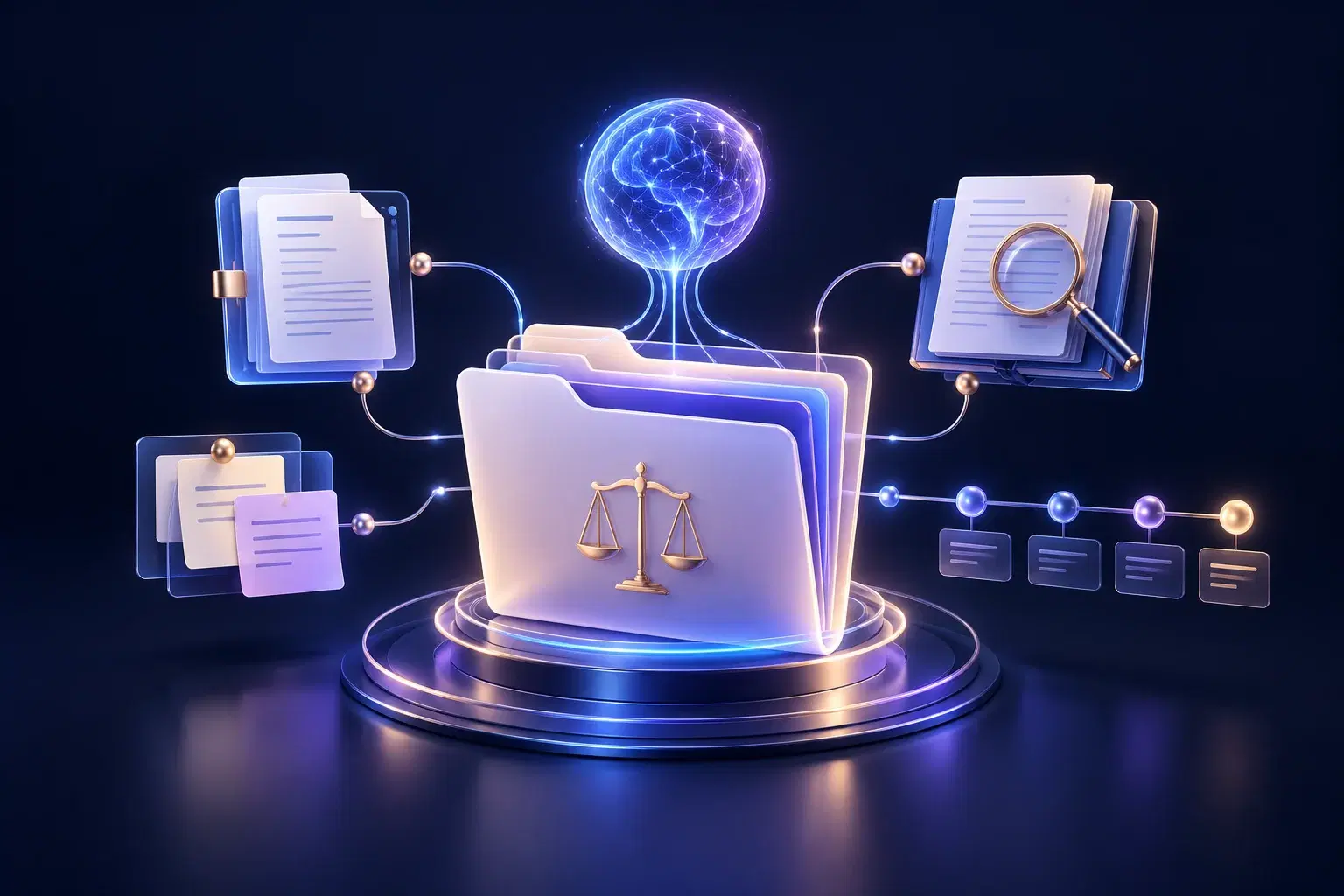
A matter can bring together the information and work associated with a case, transaction, dispute or other legal engagement—including documents, research, notes, tasks, timelines and drafts.
The objective is not simply organization.
The objective is context.
When relevant information exists within the matter, AI can potentially become far more useful because it can work with the surrounding legal context rather than treating every request as an isolated question.
This creates a fundamentally different workflow:
Matter → Context → Intelligence → Legal Work
One Workspace for the Legal Workflow
The developing SmartLawAI workspace is being designed to connect several activities that legal professionals commonly perform across different tools.
Matter Workspace
Each matter provides a dedicated environment for organizing the legal work associated with it.
Rather than having documents, notes, research and AI conversations scattered across unrelated systems, they can remain connected to the matter they belong to.
Document Intelligence
Legal professionals work with information buried inside contracts, pleadings, judgments, correspondence, evidence and other documents.
SmartLawAI is being developed to help professionals work with those documents intelligently—understanding, reviewing and analyzing information within the context of the matter.
Legal Research
Research should not necessarily exist separately from the matter that created the research question.
Our direction is to make research part of the workspace so that relevant authorities, findings and analysis can contribute to the broader understanding of the matter.
Legal Analysis
A legal matter is rarely about simply finding information.
Professionals must identify issues, examine facts, understand risks, compare positions and consider potential approaches.
AI-assisted analysis can help organize and examine this information while leaving legal judgment where it belongs: with the legal professional.
Legal Drafting
Drafting becomes more useful when the system understands the context behind the document.
Instead of repeatedly providing the same background before generating or revising work, the longer-term SmartLawAI model is to allow drafting to draw upon appropriate matter context.
Tasks, Notes and Timeline
Legal work also involves actions and chronology.
Connecting tasks, notes and timeline information to the same workspace can provide a more complete picture of what has happened, what is important and what needs to happen next.
AI That Works With the Matter, Not Just the Prompt
This distinction is central to where we are taking SmartLawAI.
Traditional AI interaction typically begins with a prompt:
Question → AI → Answer
That model is useful, and it will remain available.
But complex professional work requires something deeper.
SmartLawAI is being developed toward:
Matter → Documents + Facts + Research + Notes + Tasks + History → AI Context → Analysis + Research + Drafting + Action
The difference is persistence.
Legal professionals should not have to reconstruct the entire background of a matter every time they want AI assistance.
The platform should increasingly understand the working environment surrounding the request.
That is what we mean when we talk about an AI Legal Workspace rather than simply an AI legal chatbot.
The Next Stage: Matter Intelligence
The Matter Workspace is the foundation.
The longer-term opportunity is what can eventually be built on top of that foundation: Matter Intelligence.
Once information surrounding a matter is appropriately organized and connected, AI can potentially assist with more sophisticated questions.
What are the important facts?
How are documents related?
What happened and when?
What evidence supports a particular position?
Where might information be missing?
What legal issues require further research?
How does new information change the existing understanding of the matter?
This is where legal AI begins moving from generating individual outputs toward helping professionals understand the structure of complex legal work.
Our long-term vision is therefore not simply to put more AI features into a dashboard.
It is to create an intelligence layer around the legal matter.
From Assistance Toward Agentic Legal Workflows
Another part of this evolution involves AI agents and connected workflows.
Today, a lawyer may separately research an issue, review documents, extract important facts, prepare an analysis, draft something and then verify the work.
Over time, specialized AI workflows may help coordinate parts of these processes.
For example, different capabilities could assist with intake, research, document review, drafting and verification while operating within the appropriate matter context.
The professional remains responsible for the work and judgment, but the technology becomes increasingly capable of assisting across a workflow rather than performing only a single isolated task.
That distinction matters.
The future of professional AI is unlikely to be defined simply by who has the longest list of AI buttons.
It will be defined by how intelligently those capabilities work together.
Legal Professionals Remain at the Center
As SmartLawAI becomes more capable, one principle remains important:
AI should support professional judgment—not pretend to replace it.
Legal work involves interpretation, responsibility, ethics, strategy and judgment.
The purpose of SmartLawAI is therefore not to remove the legal professional from the process.
It is to reduce unnecessary friction around the professional.
Less time searching through disconnected information.
Less repetition when providing context.
Better organization of matter knowledge.
Faster access to relevant information.
A more connected path from research to analysis to drafting.
And more time for the work that requires human judgment.
One Platform, Different Legal Environments
The underlying workspace model can support different ways of working.
A solo practitioner may need one place to manage matters and work with documents and AI.
A law firm may need structured matter workspaces that can eventually support collaboration across lawyers and teams.
A corporate legal department may organize work around contracts, disputes, regulatory questions and internal legal matters.
Compliance professionals may work with policies, regulatory materials, investigations and organizational documents.
The workflows differ, but the underlying problem is similar:
important legal context is fragmented.
SmartLawAI is being built to bring that context together.
Building the Foundation First
Some of the most exciting possibilities in legal AI are also the easiest to overpromise.
We are taking a different approach.
Before increasingly sophisticated intelligence can become dependable, the underlying matter architecture needs to be strong.
That means building the foundation: Matter Workspace, documents, research, notes, tasks, timelines and the systems that connect AI to the appropriate context.
More advanced intelligence can then be developed on top of that foundation.
This is why the Matter Workspace represents an important stage in SmartLawAI's development.
It isn't simply another feature.
It is the foundation for what comes next.
A New Direction for SmartLawAI
SmartLawAI started by asking:
How can AI help a legal professional answer a question?
Our ambition is becoming broader:
How can AI help a legal professional work through an entire matter?
That changes the product.
It changes the architecture.
It changes the experience.
And ultimately, it changes what SmartLawAI can become.
We are building toward a platform where matters, documents, research, analysis, drafting and workflows no longer exist as disconnected pieces—where AI can work with the context surrounding legal work and help turn fragmented information into usable intelligence.
Everything starts with a Matter.
And from that Matter comes the opportunity for something much larger:
From Matter to Legal Intelligence.
SmartLawAI, Inc.
The AI-powered workspace for modern legal work.